

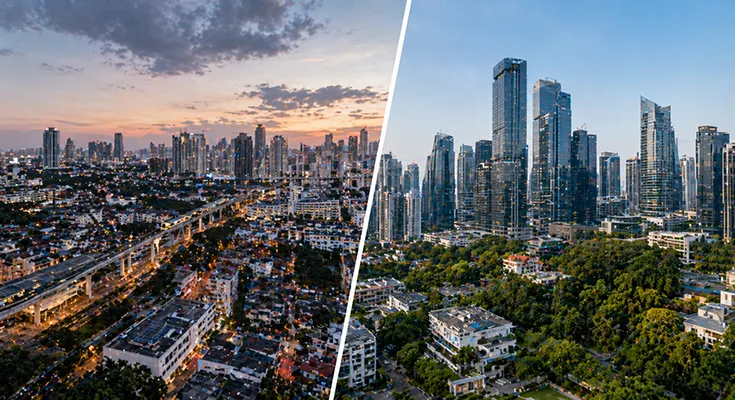
Singapore’s compact geography creates a unique investment landscape where location differences are measured not in hours, but in minutes. Yet within this small island, the contrast between prime districts and city-fringe areas can significantly influence property performance.
For investors and homebuyers alike, the question remains: is it better to invest in prestigious prime districts or focus on the increasingly popular city-fringe locations?
Defining Prime and City-Fringe Area
Prime districts—often referred to as Core Central Region (CCR)—include some of Singapore’s most prestigious neighborhoods. These areas are known for luxury developments, proximity to Orchard Road, and a reputation for exclusivity.
City-fringe areas, or the Rest of Central Region (RCR), sit just outside the core. They offer strong connectivity to the city while typically being more accessible in terms of price.
While the physical distance between these zones may be small, the investment dynamics can differ substantially.
Entry Price and Affordability
One of the most obvious differences lies in entry price. Prime district properties command a significant premium, often requiring a larger upfront investment.
City-fringe properties, on the other hand, offer a lower barrier to entry. This allows investors to diversify more easily or allocate funds across multiple assets.
For many buyers, affordability isn’t just about the purchase price—it’s about financial flexibility. Lower entry costs can reduce financial strain and improve holding power, especially in uncertain market conditions.
Rental Demand and Yield Differences
Rental yield often varies between these two segments. Prime districts attract affluent tenants and expatriates, but high purchase prices can compress yields.
City-fringe areas typically offer stronger rental yields due to their more balanced price points and broad tenant appeal. These locations attract a mix of professionals, families, and students, creating a diverse and stable tenant base.
Developments like Amberwood at Holland demonstrate how city-fringe properties can benefit from both accessibility and lifestyle appeal, making them attractive to tenants seeking convenience without the premium pricing of prime districts.
Capital Appreciation Potential
Prime properties are often associated with long-term capital preservation. Their scarcity and status contribute to steady, albeit sometimes slower, appreciation.
City-fringe areas, however, may offer stronger growth potential, particularly when supported by infrastructure development or urban transformation projects.
Investors who enter city-fringe markets at the right time can benefit from upward price movement as these areas mature and demand increases.
Lifestyle and Livability Factors
Lifestyle considerations play a growing role in property decisions. While prime districts offer prestige and proximity to high-end retail and dining, city-fringe areas are increasingly closing the gap.
Modern developments in city-fringe locations often include comprehensive facilities and are situated near vibrant neighborhoods. This makes them appealing not only to investors but also to owner-occupiers.
Projects such as Thomson Reserve highlight how non-core locations can deliver a high-quality living environment, combining accessibility with a more relaxed atmosphere.
Market Resilience and Risk
Prime districts are generally viewed as more resilient during market downturns. Their established reputation and limited supply help support demand even in challenging conditions.
City-fringe properties, while slightly more sensitive to market fluctuations, benefit from a broader buyer pool. This can provide a level of stability, especially during recovery phases when affordability becomes a key factor.
Understanding your risk tolerance is essential when choosing between these segments. Prime properties may offer security, while city-fringe investments may provide higher growth potential.
Buyer Profiles and Demand Trends
Different types of buyers are drawn to different segments.
- High-net-worth individuals often prefer prime districts for prestige and asset preservation
- Middle-income buyers and investors are more active in city-fringe areas due to affordability
- Tenants increasingly favor city-fringe locations for their balance of cost and convenience
These demand patterns influence both rental performance and resale potential.
Infrastructure and Future Growth
Singapore’s continuous urban development plays a crucial role in shaping property values. New MRT lines, commercial hubs, and lifestyle precincts can elevate city-fringe areas, narrowing the gap with prime districts.
Investors who pay attention to these developments can identify opportunities before they become widely recognized.
Prime districts, while already established, still benefit from enhancements and rejuvenation projects, though the impact on prices may be less dramatic.
Finding the Right Balance
The choice between city-fringe and prime districts ultimately depends on your investment objectives.
If your priority is long-term stability and prestige, prime districts may be the better fit. If you are seeking stronger rental yields and growth potential, city-fringe areas could offer more opportunities.
Some investors adopt a balanced approach, holding assets in both segments to diversify risk and returns.
A Strategic Perspective on Location
Singapore’s real estate market does not present a one-size-fits-all answer. Both prime and city-fringe properties have their merits, and each can perform well under the right conditions.
The key lies in understanding how each segment aligns with your financial goals, risk appetite, and time horizon. By evaluating factors such as pricing, demand, and future development, you can make more informed decisions in a market where location continues to play a defining role.
In the end, successful property investment in Singapore is not just about choosing the “best” location—it’s about choosing the right one for your strategy.