

The Battle of the Brains: Alexa+ vs. Google Gemini in the 2026 NLP Showdown

The Battle of the Brains: Alexa+ vs. Google Gemini in the 2026 NLP Showdown

For the better part of a decade, smart assistants were essentially digital filing cabinets: you gave a specific command, and they retrieved a pre-scripted response. But in 2026, we have witnessed the “Great Decoupling” of voice technology. We have moved from Intent-Based NLP—where the system tries to match your words to a fixed list of commands—to Generative NLP, where the assistant actually “reasons” through your request in real-time.

The two titans of this era, Amazon with its revamped Alexa+ and Google with its fully integrated Gemini for Home, are no longer just speakers on a counter. They are competing Large Language Models (LLMs) battling for the role of your “Chief Operating Officer” of the home.

1. The Core Tech: Agentic AI vs. Multimodal Mastery

The architectural philosophies of Amazon and Google have diverged sharply in 2026.

Alexa+: The Rise of the Agent

Amazon’s 2026 strategy with Alexa+

The Battle of the Brains: Alexa+ vs. Google Gemini in the 2026 NLP Showdown Read More

Defeating the Deluge: How to Prevent Gutter Overflow During 2026’s Extreme Storms

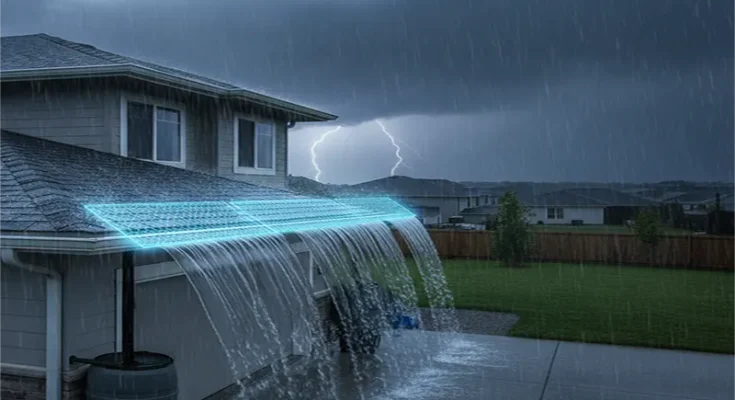
Defeating the Deluge: How to Prevent Gutter Overflow During 2026’s Extreme Storms

In 2026, the traditional rainy season has been replaced by a more volatile “convective” weather pattern. Homeowners are increasingly facing short, intense bursts of rainfall—often 3 to 4 inches per hour—that can turn a standard gutter system into a cascading waterfall in minutes.

Most residential gutters were historically sized for “100-year storms” that no longer match today’s climate reality. When your gutters overflow, it isn’t just a nuisance; it is a direct threat to your home’s structural integrity, leading to foundation erosion, basement flooding, and siding rot. To protect your home in 2026, you must transition from simple “maintenance” to “volume management.”

Phase 1: The Geometry of Drainage (Pitch & Size)

The most common reason for overflow in heavy rain—even when gutters are clean—is that the system simply cannot move the volume of water fast enough.

  • The 6-Inch Standard: While 5-inch gutters were the 20th-century norm, 2026 standards have shifted
Defeating the Deluge: How to Prevent Gutter Overflow During 2026’s Extreme Storms Read More
Luminous Wellness: Mastering Smart Home Lighting for Better Sleep and Circadian Rhythms in 2026

Luminous Wellness: Mastering Smart Home Lighting for Better Sleep and Circadian Rhythms in 2026

For decades, the standard for indoor lighting was a simple toggle: “on” or “off.” In 2026, we understand that this binary approach has a profound biological cost. Modern homes are now designed around Human-Centric Lighting (HCL), a strategy that recognizes light not just as a way to see, but as the primary drug that regulates our internal chemistry.

The breakthrough in 2026 isn’t just about better bulbs; it’s about the integration of Matter 1.5 and a deep scientific understanding of the ipRGCs (intrinsically photosensitive retinal ganglion cells) in our eyes. These cells are the “biological gatekeepers” that translate light into chemical signals for our brain’s master clock, the Suprachiasmatic Nucleus (SCN). By mastering your smart home lighting, you are quite literally hacking your own biology.

Phase 1: The Morning “Blue Reset” (06:00 – 10:00)

Your circadian rhythm begins the moment light hits your eyes in the morning. To “reset” …

Luminous Wellness: Mastering Smart Home Lighting for Better Sleep and Circadian Rhythms in 2026 Read More
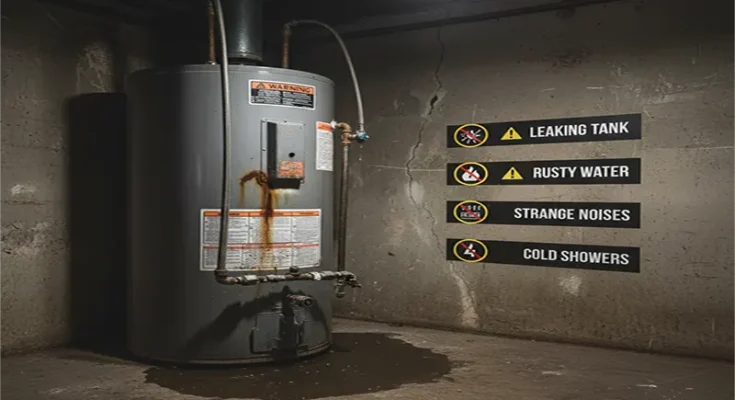
Signs your water heater needs replacing

Signs your water heater needs replacing

Understanding when to replace your unit is no longer just about waiting for a flood. It’s about recognizing the “silent” warnings of inefficiency and mechanical fatigue. Here is the cold truth about the seven signs that your water heater is nearing the end of its life.

1. The Decade Milestone (Age)

In 2026, the first thing any plumber will ask is the age of your unit. Most traditional tank-style water heaters are designed to last 8 to 12 years. If your unit was installed before 2016, you are officially living on borrowed time.

How to find the age:

Look at the manufacturer’s sticker for the serial number.

  • Rheem/Ruud: The first four digits are the month and year (e.g., 0526 is May 2026).
  • A.O. Smith: The first two digits are the year (e.g., 26 means 2026).
  • Bradford White: This is a code. The first letter is the year (e.g., “C”
Signs your water heater needs replacing Read More