
Defeating the Deluge: How to Prevent Gutter Overflow During 2026’s Extreme Storms

Defeating the Deluge: How to Prevent Gutter Overflow During 2026’s Extreme Storms

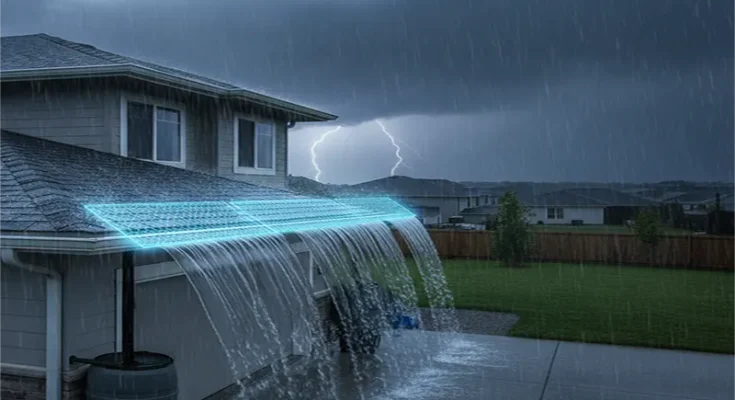
In 2026, the traditional rainy season has been replaced by a more volatile “convective” weather pattern. Homeowners are increasingly facing short, intense bursts of rainfall—often 3 to 4 inches per hour—that can turn a standard gutter system into a cascading waterfall in minutes.

Most residential gutters were historically sized for “100-year storms” that no longer match today’s climate reality. When your gutters overflow, it isn’t just a nuisance; it is a direct threat to your home’s structural integrity, leading to foundation erosion, basement flooding, and siding rot. To protect your home in 2026, you must transition from simple “maintenance” to “volume management.”

Phase 1: The Geometry of Drainage (Pitch & Size)

The most common reason for overflow in heavy rain—even when gutters are clean—is that the system simply cannot move the volume of water fast enough.

  • The 6-Inch Standard: While 5-inch gutters were the 20th-century norm, 2026 standards have shifted
Defeating the Deluge: How to Prevent Gutter Overflow During 2026’s Extreme Storms Read More
Signs your water heater needs replacing

Signs your water heater needs replacing

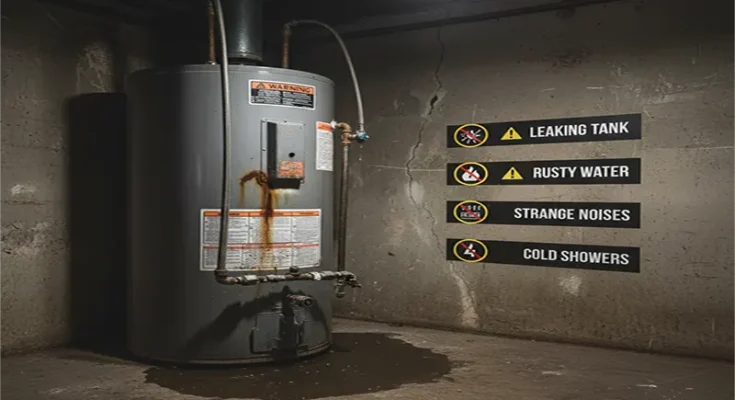
Understanding when to replace your unit is no longer just about waiting for a flood. It’s about recognizing the “silent” warnings of inefficiency and mechanical fatigue. Here is the cold truth about the seven signs that your water heater is nearing the end of its life.

1. The Decade Milestone (Age)

In 2026, the first thing any plumber will ask is the age of your unit. Most traditional tank-style water heaters are designed to last 8 to 12 years. If your unit was installed before 2016, you are officially living on borrowed time.

How to find the age:

Look at the manufacturer’s sticker for the serial number.

  • Rheem/Ruud: The first four digits are the month and year (e.g., 0526 is May 2026).
  • A.O. Smith: The first two digits are the year (e.g., 26 means 2026).
  • Bradford White: This is a code. The first letter is the year (e.g., “C”
Signs your water heater needs replacing Read More
Breathe Easier: The Critical Link Between HVAC Maintenance and Indoor Air Quality

Breathe Easier: The Critical Link Between HVAC Maintenance and Indoor Air Quality

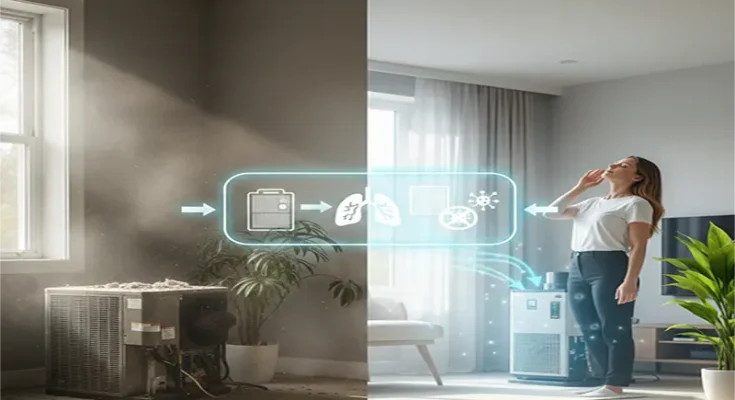
In 2026, the primary role of a home heating and cooling system has undergone a fundamental shift. No longer just a tool for thermal comfort, the modern HVAC system is now recognized as a home’s “respiratory system.” With outdoor challenges like extended wildfire smoke seasons and high pollen counts becoming the new normal, our indoor sanctuaries are under pressure.

Current environmental data reveals a startling reality: indoor air is often two to five times more polluted than outdoor air. From off-gassing furniture (VOCs) to microscopic mold spores, our homes can suffer from “Sick Building Syndrome” if left unmanaged. In this new landscape, regular HVAC maintenance is no longer about saving a few dollars on the electric bill; it is a critical health defense strategy.

Section 1: The Filtration Frontline

The air filter is the first and most vital line of defense in your IAQ strategy. In 2026, the industry has …

Breathe Easier: The Critical Link Between HVAC Maintenance and Indoor Air Quality Read More
Winter-Proofing Your Roof: The 2026 Homeowner’s Guide to Preventing Ice Dams and Leaks

Winter-Proofing Your Roof: The 2026 Homeowner’s Guide to Preventing Ice Dams and Leaks

Winter is the ultimate “stress test” for a home, and the roof is on the front lines. In 2026, as weather patterns become increasingly volatile, homeowners can no longer afford to ignore their roofing systems until a leak appears on the ceiling.

The primary danger isn’t just a simple hole in a shingle; it’s the Freeze-Thaw Cycle. When temperatures fluctuate, snow melts during the day and refreezes at night. If your roof isn’t properly prepared, this cycle creates ice dams—thick ridges of ice at the eaves that trap water, forcing it upward under your shingles and directly into your home’s structure. A minor $400 maintenance check in October can easily prevent a $15,000 emergency structural repair in mid-January.

Phase 1: The Exterior Inspection (Ground & Ladder)

Before the first frost, conduct a thorough visual audit. You don’t always need to climb a ladder to find trouble; a good …

Winter-Proofing Your Roof: The 2026 Homeowner’s Guide to Preventing Ice Dams and Leaks Read More
The Homeowner’s 2026 Guide to Average Home Repair Costs

The Homeowner’s 2026 Guide to Average Home Repair Costs

Owning a home has always been a primary pillar of the American Dream, but in 2026, that dream comes with a sophisticated—and sometimes staggering—price tag for maintenance. While the “supply chain chaos” of the early 2020s has largely smoothed out, homeowners now face a different challenge: a critical shortage of skilled tradespeople and the rising cost of high-efficiency, “smart” home components.

Industry data for 2026 suggests the average U.S. homeowner should budget between $6,000 and $11,000 annually for routine maintenance and repairs. This aligns with the 1% Rule (budgeting 1% of your home’s value for annual repairs), though owners of aging homes or those in high-cost-of-living metros like Seattle or Boston may need to push that to 2% or 3%.

Section 1: The Heavy Hitters (Roofing & Foundation)

The “envelope” of your home is your first line of defense. In 2026, roofing costs are driven by a shift toward more …

The Homeowner’s 2026 Guide to Average Home Repair Costs Read More