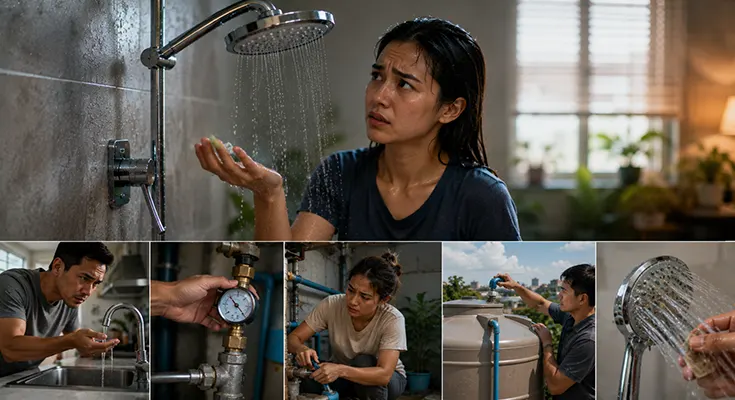
Low water pressure turns simple tasks into frustrations. Showers become weak, dishwashers take longer to fill, and washing machines struggle to complete cycles. The problem can appear suddenly or develop gradually, and the cause is not always obvious. Municipal supply issues, plumbing restrictions, or well system problems can all reduce flow. Identifying the source is the first step toward restoring normal pressure. For homes that rely on private wells, properly sized and maintained well pumps for steady pressure often make a significant difference in daily performance.
Water pressure depends on several factors working together: the supply source, the condition of pipes and fixtures, and any mechanical equipment that moves water through the house. When pressure drops, checking these elements systematically usually reveals the issue without unnecessary guesswork.
Distinguishing Between Whole-House and Localized Problems
Start by determining whether the low pressure affects the entire home or only certain fixtures. Open faucets on different floors and in different rooms. If every outlet shows reduced flow, the problem likely involves the main supply, a pressure regulator, the well pump, or a major restriction in the main line. If only one faucet or shower is weak, the issue is more likely a clogged aerator, a failing cartridge, or a localized pipe restriction.
Note whether the pressure is consistently low or varies throughout the day. Municipal systems sometimes experience drops during peak demand hours. Well systems may show reduced pressure when the pump is struggling or the pressure tank has lost its air charge.
Common Causes of Low Water Pressure
Several frequent issues account for most residential pressure problems:
- Clogged aerators or showerheads filled with mineral deposits
- Partially closed or failing shut-off valves
- Corroded or scaled galvanized pipes that have narrowed over time
- A malfunctioning pressure-reducing valve set too low or stuck
- Leaks in the supply line that reduce available volume
- Sediment buildup in well systems or municipal service lines
- Undersized or aging well pumps that can no longer meet demand
- A water-logged or failed pressure tank that causes short cycling
Hard water accelerates mineral buildup inside pipes and fixtures. Older homes with galvanized plumbing are especially prone to internal corrosion that restricts flow. In well systems, a pump that has reached the end of its service life or a pressure switch that is out of adjustment can produce weak or fluctuating pressure.
Checking Simple Fixes First
Many pressure problems have straightforward solutions. Unscrew faucet aerators and showerheads and soak them in vinegar to dissolve mineral deposits. Flush the fixtures thoroughly before reinstalling. Confirm that the main shut-off valve and any individual fixture valves are fully open. A valve that appears open but is only partially turned can restrict flow significantly.
If the home has a pressure-reducing valve, locate it (usually near where the main line enters the house) and check the setting. These valves are often adjustable. Increasing the setting slightly can restore pressure, though the valve itself may need cleaning or replacement if it has failed.
Inspect visible pipes for signs of leaks or corrosion. Even small leaks can lower pressure and waste water. Listen for the sound of running water when all fixtures are off; that can indicate a hidden leak.
Addressing Well System Pressure Issues
Homes with private wells face a different set of variables. The pump, pressure tank, and pressure switch work together to maintain consistent pressure. When any of these components underperform, the result is often weak or fluctuating flow at the taps.
A pressure tank that has lost its air charge becomes water-logged. The pump then short-cycles, turning on and off rapidly, which reduces effective pressure and shortens pump life. Checking the tank’s air pressure (with the power off and the tank drained) and adjusting it to the correct level often restores normal operation.
Pressure switches can drift out of adjustment or fail. The cut-in and cut-out settings determine when the pump starts and stops. Incorrect settings produce either inadequate pressure or constant cycling. Pumps themselves wear out. An aging or undersized pump may no longer deliver the volume or pressure the household requires, especially if water demand has increased over the years or the well yield has declined.
Sediment or iron buildup can also restrict flow in well systems. Periodic inspection and cleaning of the well components help maintain performance. Professional testing of pump output, well yield, and system pressure provides clear data for deciding whether repair or replacement is needed.
Plumbing and Municipal Supply Considerations
In homes connected to a public water system, the utility’s supply pressure is the starting point. If neighbors are experiencing similar issues, the problem may lie with the municipal system. Contacting the water utility can confirm whether work is underway or temporary reductions are expected.
Inside the home, pipe diameter and condition matter. Undersized pipes or long runs of older galvanized line create friction losses that lower pressure at distant fixtures. Replacing sections of restricted piping or upgrading to modern materials can improve flow. Fixture demand also plays a role. Multiple showers, irrigation systems, or high-flow appliances running simultaneously can temporarily drop pressure in systems that lack adequate capacity.
Practical Next Steps for Restoration
Once the likely cause is identified, prioritize solutions based on cost, disruption, and expected improvement. Simple cleaning and valve adjustments resolve many cases. Pressure tank service or pressure switch adjustment often restores well-system performance. When pipes are heavily scaled or a pump is near the end of its life, more substantial repairs or replacements become necessary.
Professional diagnosis is valuable when the cause is unclear or when specialized equipment is required. Technicians can measure static and dynamic pressure, test pump performance, check for leaks with specialized tools, and evaluate the overall system design. Accurate diagnosis prevents replacing components that are still functional.
Conclusion
Low water pressure is a common household problem with a manageable list of usual causes. Systematic checking of fixtures, valves, pipes, and supply equipment usually reveals the source. Simple maintenance often restores usable pressure, while aging well components or restricted plumbing may require more targeted repairs. Addressing the issue promptly improves daily comfort and helps protect the longer-term performance of the home’s water system. Consistent pressure at every faucet is an achievable goal once the underlying restriction or equipment limitation is corrected.