

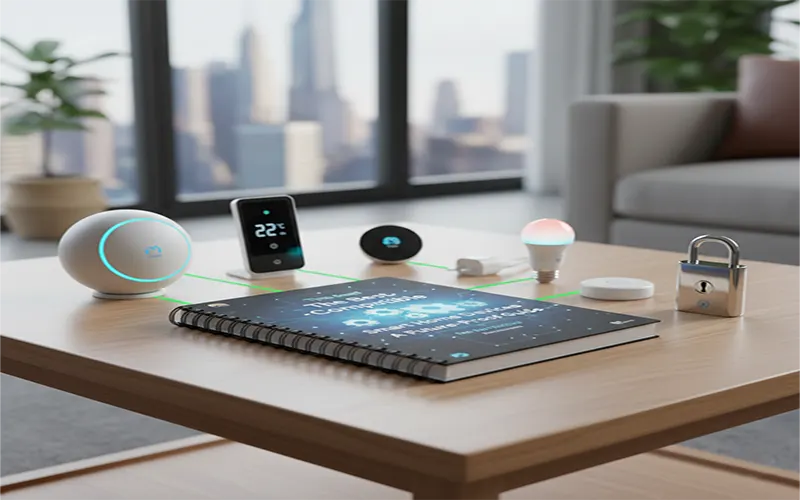
For years, the “smart home” felt like a fragmented puzzle. You’d buy a light bulb only to realize it didn’t talk to your voice assistant, or you’d need four different apps just to turn off the lights before bed. In 2026, those days are officially over thanks to Matter.
Matter is the universal language for smart home devices. Developed by a rare alliance between Apple, Google, Amazon, and Samsung, it ensures that if a box has the Matter logo, it will work with your preferred phone or smart speaker. Whether you are an iPhone user, an Android fan, or an Alexa devotee, Matter is the “glue” that makes your home finally feel smart.
Step 1: The Brain (Matter Controllers)
Before you buy your first bulb, you need a Matter Controller. Think of this as the conductor of your orchestra. It stays plugged into your wall and communicates with all your devices locally, meaning your lights will still turn on even if your internet goes out.
The best part? You might already own one. As of 2026, these are the top beginner-friendly controllers:
- Apple HomePod Mini (2nd Gen): The gold standard for iPhone users. It’s small, sounds great, and includes a “Thread Border Router” (more on that later) for lightning-fast device response.
- Google Nest Hub (2nd Gen) or Nest Hub Max: Perfect for those who want a visual dashboard. You can see your doorbell camera and dim your lights with a swipe.
- Amazon Echo (4th Gen) or Echo Show 8: If you’re already an Alexa household, these devices have been updated to act as robust Matter controllers.
Beginner Pitfall: Don’t confuse a “Smart Speaker” with a “Matter Controller.” Older Echo Dots or 1st Gen Nest Minis may not support Matter. Always check the specs for Matter Controller and Thread Border Router support.
The Quick Wins: Smart Plugs & Bulbs
The easiest way to start a smart home is by automating things you already use.
1. TP-Link Tapo P110M Smart Plug
Smart plugs are the “gateway drug” of home automation. The Tapo P110M is a standout because it doesn’t just turn things on and off; it features Energy Monitoring. In 2026, with energy costs being a top priority, you can see exactly how much electricity your space heater or coffee maker is drawing in real-time.
- Best Use: Plug in a “dumb” floor lamp or a fan.
- The Routine: Set an “Auto-Off” timer so your curling iron or hair straightener never stays on longer than 30 minutes.
2. Nanoleaf Essentials Matter Bulbs
Unlike old smart bulbs that required a proprietary “bridge” plugged into your router, Nanoleaf bulbs connect directly to your Matter controller using Thread. They offer millions of colors and “Circadian Lighting,” which shifts the light from cool blue in the morning to warm amber in the evening to help you sleep.
- Best Use: Bedroom lamps or hallway lights.
- The Routine: Create a “Movie Night” scene that dims the lights to 10% purple with a single voice command.
Expanding the Home: Sensors & Locks
Once you can control your lights, the next step is making them “automatic” so you never have to touch a switch again.
Aqara P2 Door and Window Sensor
This is one of the first and best Matter-over-Thread sensors. It consists of two small pieces that you stick to a door or window frame. When the pieces separate, the sensor sends a signal.
- Why it’s great: It’s incredibly fast. There is zero “lag” between opening the door and the light turning on.
- The Routine: “If the front door opens after 6:00 PM, turn on the entryway light and the living room lamp.”
Kwikset Aura Reach or Yale Assure Lock 2
Smart locks can be intimidating, but Matter has made them much simpler. These locks look like “normal” hardware but allow you to lock up via your phone or share temporary digital keys with guests.
- The “Magic” Moment: Using the Multi-Admin feature of Matter, you can lock your door using your Apple Watch, while your spouse checks the lock status on their Android tablet.
Understanding the Tech: Thread vs. Wi-Fi
You will notice Matter devices often mention Thread.
- Wi-Fi Matter devices (like most smart plugs) are great for things that are always plugged into power.
- Thread Matter devices (like sensors and locks) are better for battery-powered gadgets. Thread creates a “mesh” in your home where every device helps pass the signal along. This makes the connection much more reliable and saves battery life—some sensors can now last two years on a single coin battery.
The “Multi-Fabric” Magic
The single coolest feature of Matter for a beginner is Multi-Fabric. In the past, if you set up a bulb in the Apple Home app, it was “trapped” there. With Matter, you can generate a “Setup Code” for a device that’s already installed and scan it into a different app.
Imagine you have an iPhone, but your roommate has a Samsung. With Matter, you can both control the same lights, thermostats, and plugs from your respective favorite apps simultaneously. No more fighting over who “owns” the smart home.
Setup Guide: The Golden Rule of the QR Code
Setting up a Matter device is as simple as scanning a QR code found on the back of the device or in the manual.
Critical Tip: Never throw away the Matter QR code. Unlike old Wi-Fi devices that you could just “reset,” many Matter devices require that specific 11-digit code or QR sticker to re-join a network. Take a photo of the sticker and save it in a digital album titled “Home Codes.”
Why 2026 is the Time to Start
We have finally reached the point where smart home technology is no longer a hobby for “techies.” Matter has lowered the barrier to entry so far that anyone can build a reliable system in a single afternoon.
By choosing Matter-compatible devices, you are future-proofing your home. You aren’t locking yourself into one brand or one phone manufacturer. You are building a home that is flexible, secure, and—most importantly—easy to use. Start with a single plug, feel the magic of a voice-controlled lamp, and let your smart home grow from there.